




Still Using Meta Keywords? Here Are 4 Reasons to Stop Immediately
The Ghost of SEO Past
In the complex and ever-evolving world of search engine optimization, it's easy for outdated practices to linger long after they've lost their effectiveness. Like ghosts in the machine, these old habits can clutter your code and distract from strategies that actually work. The meta keywords tag is perhaps the most persistent of these SEO ghosts. For years, it was a foundational element, a direct line to tell search engines what your page was about.
But does this tag still hold any value today? Can filling it out give you even a slight edge, or is it, at best, a waste of time? More importantly, could it be doing more harm than good?
This article will definitively answer that question, busting this persistent myth with four impactful takeaways straight from official sources and expert analysis. The truth about the meta keywords tag isn't a gray area—it's a settled matter, and understanding why is critical for any modern SEO strategy.
1. Google Made Its Decision on Meta Keywords in 2009
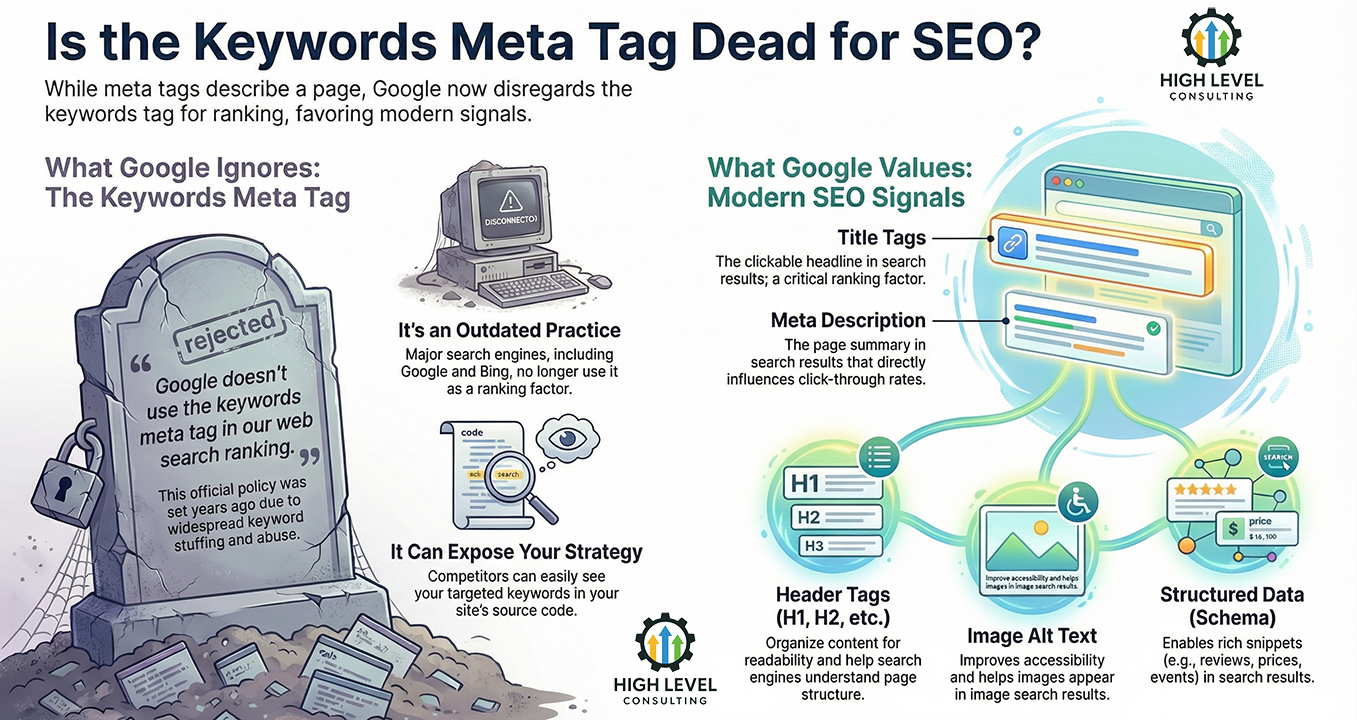
The single most important fact about the meta keywords tag is that Google's web search does not use it for search ranking. At all. This isn't a recent development or a subtle shift in algorithms; it's a public policy that has been in place for over a decade.
Google officially began disregarding the tag many years ago because the practice of "keyword stuffing"—loading the tag with dozens of irrelevant or repetitive keywords—had made it a completely unreliable signal. In an effort to provide better search results, Google chose to ignore it completely. The Google Search Central blog stated this in no uncertain terms:
"Because the keywords meta tag was so often abused, many years ago Google began disregarding the keywords meta tag."
This isn't a debated topic among SEO professionals; it is a settled fact directly from the primary source. With Google accounting for 92.6% of the search engine market share as of June 2023, their official stance effectively renders the tag obsolete for ranking purposes.
Here's what Google had to say about it back in 2009:
2. It's Not Just Useless, It Can Be a Spam Signal
While Google simply ignores the meta keywords tag, other search engines might view its misuse in a negative light. This means that using the tag is not a neutral action; it carries a potential, albeit minor, risk.
While Bing's official stance has been notably wishy-washy on the issue, the potential for harm is real. The engine may view a page with overstuffed meta keywords as potentially spammy and harmful, which could act as a negative signal.
While a few international search engines like Yandex may still consider the tag, for businesses focused on Google and the broader U.S. market, this potential benefit is negligible and far outweighed by the risks.
3. You're Giving Competitors a Peek at Your Playbook
Beyond search engines, it's important to remember who can see your meta keywords: everyone. The tag is plainly visible in your page's public-facing HTML source code.
The direct consequence of this is that you are essentially handing your keyword strategy to your competitors on a silver platter. It makes it incredibly easy for them to see the exact terms and phrases you are targeting, simplifying their competitive research. In a competitive digital landscape, why would you want to explicitly list your keyword playbook in your site's code for anyone to see and copy?
4. Focus on On-Page Elements That Actually Matter
A common and critical misunderstanding is that the obsolescence of the keywords tag means all meta tags are useless. This could not be further from the truth. While the keywords tag is obsolete, other meta tags remain important, as do several other critical on-page elements that have taken its place in modern SEO. These modern elements succeed where the keywords tag failed: they provide context and value to both users and search engines, unlike the easily spammed, invisible-to-users keywords tag.
The most important distinction to make is with the meta description tag. While Google has confirmed that the meta description is not used for ranking, it is frequently used to generate the text snippet shown below your title in the search results. A compelling, well-written description directly influences whether a user clicks on your link, making it critical for improving click-through rates.
Instead of focusing on the ghost of meta keywords, your efforts are better spent optimizing these crucial on-page elements:
Title Tags: The clickable headline that appears in search results. It is a key ranking factor and is essential for communicating the page's topic to both users and search engines.
Header Tags (H1, H2, etc.): These tags create a clear content hierarchy on your page. They improve readability for users and help search engines understand the structure and main topics of your content.
Image Alt Text: This text provides a description of an image for visually impaired users and for search engines. It improves accessibility and helps your images rank in image-based searches.
Structured Data (Schema Markup): This is code that helps search engines understand the context of your content in greater detail. It is what enables "rich snippets" in search results, such as review stars, event dates, and product prices, which can dramatically enhance your visibility.
Conclusion: Exorcise the Ghost and Focus Forward
The verdict is clear: the meta keywords tag is an obsolete relic, a ghost of a bygone SEO era. It offers no ranking benefits on Google, carries the risk of being seen as a spam signal, and needlessly reveals your keyword strategy to competitors. Removing it isn't just code cleanup; it's an exorcism of an outdated practice that allows your SEO to move forward unburdened.
Effective SEO today requires a shift in mindset—from trying to tell search engines what a page is about with a hidden tag, to showing them through high-quality content, logical site structure, and user-centric signals like compelling title tags and meta descriptions. Time spent debating or populating the meta keywords tag is time that could be invested in these strategies that deliver measurable results.
Now that you know the truth about meta keywords, what other outdated SEO habits might be hiding in your website's code?
Other sources verifying this: