

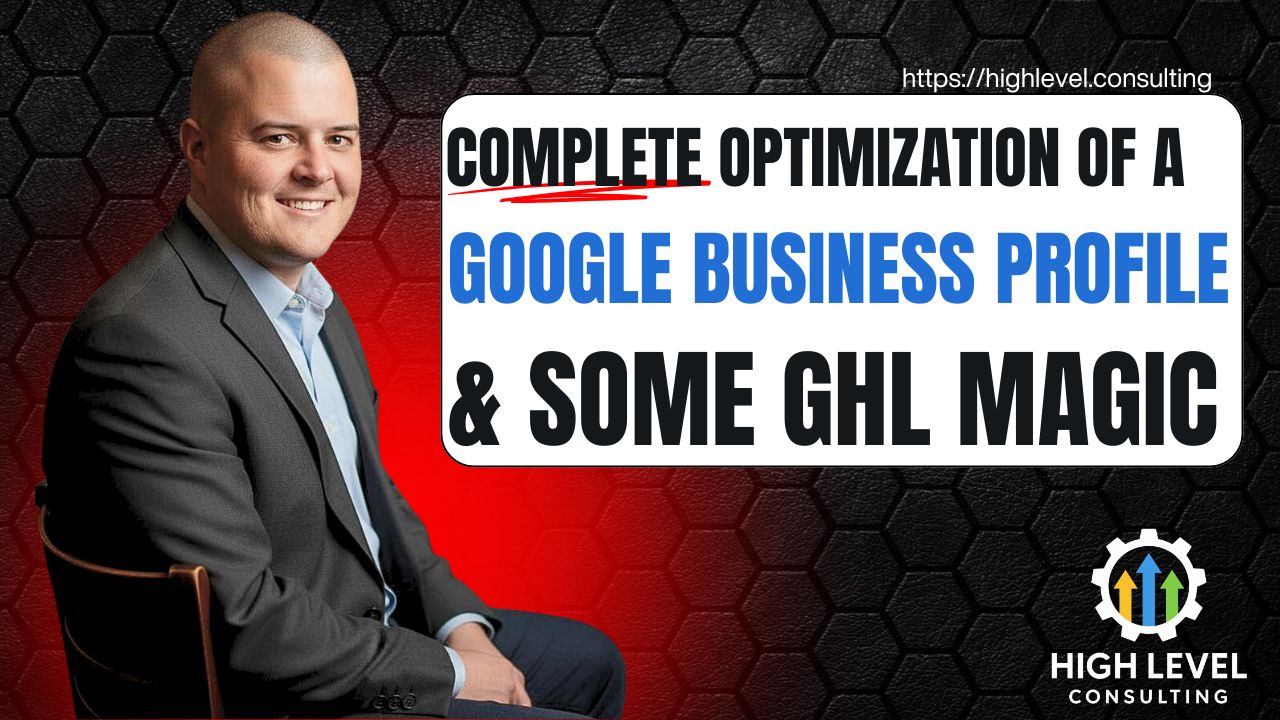
Why Most GBP Optimizations Fail: A Free Course Reveals the Structural Flaws
Introduction: Beyond the Noise
If you're an experienced SEO or digital marketer, you operate in a world of constant noise. You're bombarded with "top 10 hacks" and conflicting guidance, forcing you to navigate a landscape where most advice feels shallow and suspect. This is especially true for a platform as foundational as Google Business Profile (GBP), leading to a core conflict in our industry: the endless chase for tactical shortcuts versus the disciplined work of building a foundational, trust-based asset.
Recently, I stumbled upon a free GBP mini-course that operates on a refreshingly different philosophy. It was built for professionals from the ground up, assuming intelligence and respecting skepticism from the outset. It bypasses the hype and focuses entirely on a transparent, framework-driven approach.
This article isn’t a sales pitch. It’s a breakdown of the most impactful lessons from that strategy—insights that challenge the conventional wisdom about what it really takes to succeed in local SEO. These are valuable truths for any marketer, whether you ever watch a single video or not.

Click Here to Enroll in the Free Mini-Course!
The Surprising Takeaways
1. It’s Not About Competition; It’s About Structure.
The course's most powerful reframe is this: most Google Business Profiles underperform not because of intense competition, but because they are "structurally incomplete or incorrectly optimized." We’re often so focused on outsmarting competitors that we fail to see the foundational flaws in our own work.
This isn't just about leaving fields blank. It's about a lack of strategic alignment. For instance, this means choosing a primary category that’s technically correct but strategically misaligned with your most profitable service, effectively hiding your expertise from Google. When categories, services, descriptions, and attributes don't tell a cohesive and authoritative story, the profile fails. This is a structural problem, not a motivation or effort problem.
2. Your All-in-One Platform Isn't a Substitute for a Strategy.
For marketers using platforms like HighLevel (GHL), the promise of a unified dashboard is compelling. While you can manage a significant portion of your GBP optimization within HighLevel, the integration is not a complete replacement for the real thing. This distinction separates the practitioner from the strategist.
A practitioner executes tasks within the tool; a strategist understands the tool's limitations and knows when to go directly to the source. The critical takeaway is that crucial GBP elements are not exposed in HighLevel's interface and must be configured directly in Google. This course champions being platform-aware, not platform-dependent, reminding us that a powerful execution layer is never a full substitute for deep, direct platform management.
3. The Best Marketing is Radical Transparency.
Why would someone spend money on ads to promote a completely free course? The creator pulls the free material directly from a much larger, paid advanced course. There is no catch, no paywall, and no bait-and-switch.
The strategy is to let users experience the quality, depth, and clarity of the material firsthand. If they find immense value, they might choose to invest in the full curriculum later. If not, that's perfectly acceptable. The entire approach is built on a single, powerful philosophy designed to sidestep the industry’s pervasive skepticism:
"Earned trust, not manipulation."
4. Professionals Don't Need More Checklists; They Need Frameworks.
This material is explicitly designed for an intelligent, skeptical audience tired of surface-level tips. It recognizes that professionals don't need another simple checklist of tasks to complete. Instead, it provides a framework.
A checklist tells you what to do. A framework helps you understand why you're doing it by explaining how Google actually evaluates relevance and trust. This deeper understanding is what enables professionals to achieve rankings in competitive markets, not just easy ones. More importantly, a framework provides the underlying principles that make your strategy resilient. While a checklist becomes obsolete after the first major algorithm update, a framework allows you to adapt, evolve, and make sound decisions for years to come.
Click Here to Enroll in the Free Mini-Course!
Final Thoughts
True optimization isn't about finding the next hack; it's about a strategic imperative built on a few core truths. Achieving structural integrity is impossible without a resilient framework that explains the "why." Relying solely on a platform prevents you from accessing the controls needed to build that structure. And radical transparency is the ultimate expression of confidence in this foundational approach. It’s a philosophy of "education first, conversion second."
In a world of SEO 'hacks,' what could you achieve by focusing on building an unimpeachable foundation of trust and relevance instead?